
Savannah Cat Generations from F1 to F5
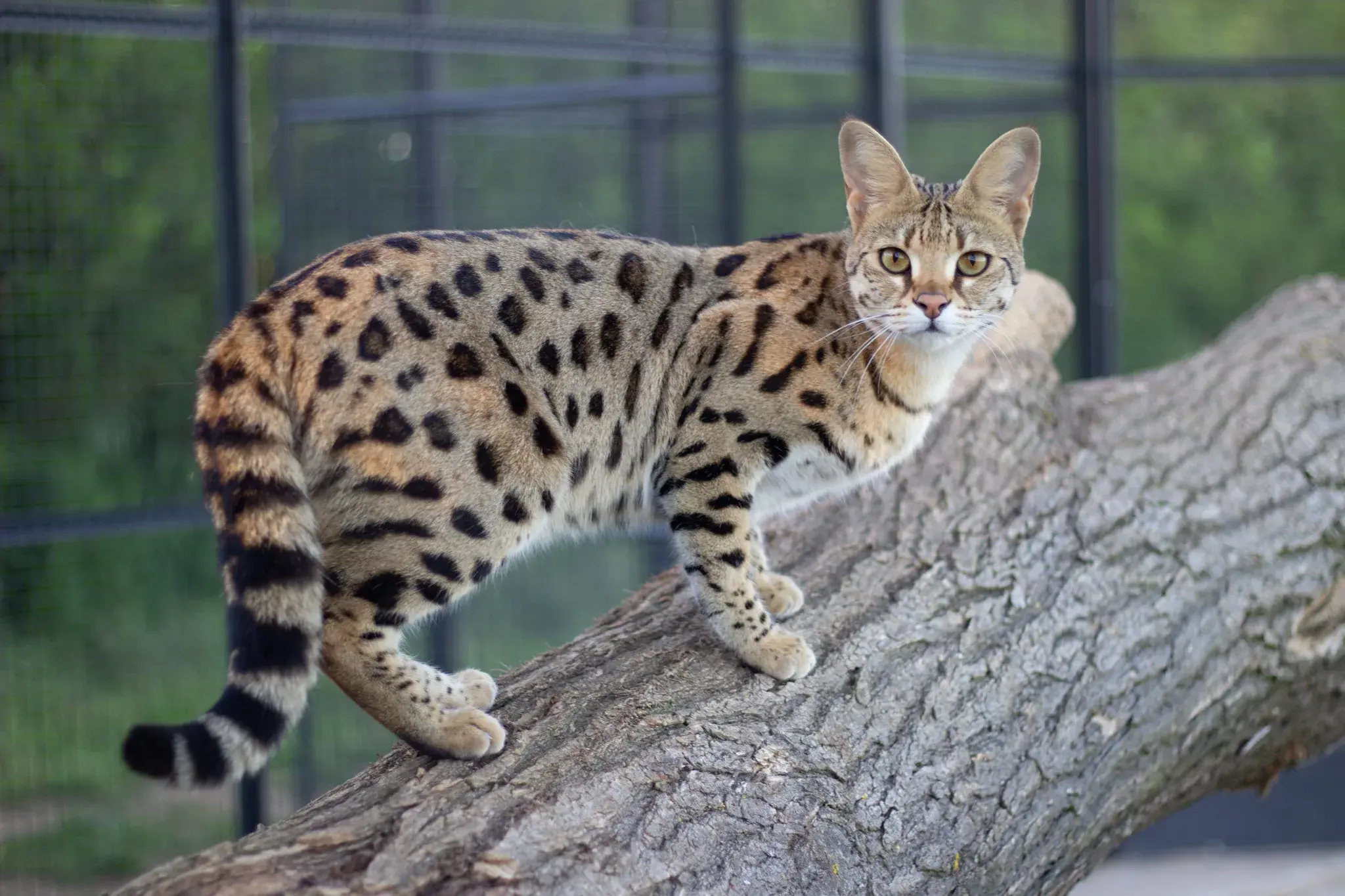
Savannah cats, with their appearance reminiscent of wild felines and their engaging personalities, have won over many admirers. Understanding their generational classifications helps, since each generation carries different traits and characteristics. Here’s a look at the different generations of Savannah cats: their genetic heritage, physical attributes, and what future owners should keep in mind.
Decoding the Generations: Unraveling the Genetic Tapestry
Savannah cat generations are designated by the letter “F” followed by a number, indicating the degree of separation from their serval ancestors. From F1 (first generation) to F5 (fifth generation), each successive generation means a gradual reduction in the percentage of serval genetics. This generational transition results in a fascinating interplay of traits, behaviors, and compatibility with different living environments.
Here is a table summarizing the percentage ranges of serval and domestic cat genetics for each Savannah cat generation:
| Generation | Percentage of Serval Genetics | Percentage of Domestic Cat Genetics |
|---|---|---|
| F1 | 50% to 75% | 25% to 50% |
| F2 | 25% to 37.5% | 62.5% to 75% |
| F3 | 12.5% to 18.75% | 81.25% to 87.5% |
| F4 | 6.25% to 9.375% | 90.625% to 93.75% |
| F5 | Up to 3.125% | More than 96.875% |
At the forefront of the generational spectrum, F1 Savannah cats occupy a special place, as they are the closest link to the wild serval lineage. These remarkable felines are the offspring of a serval parent and a domestic cat, and their genetic makeup reflects a unique blend of both worlds. The result is a captivating mix of distinctive physical traits and behaviors that reflect their wild heritage.
Physical Traits: A Reflection of Their Heritage
F1 Savannah cats bear a striking resemblance to their serval ancestors in terms of physical appearance. Their most notable features include elongated legs, large ears with an “ocellus” or eye-shaped marking on the back, and a coat adorned with intricate, captivating patterns reminiscent of the African savanna. These unique coat patterns are not only visually impressive but also serve as natural camouflage, allowing them to blend seamlessly into their environment.
Size and Presence: An Impressive Stature
One of the most striking characteristics of F1 Savannah cats is their size. Indeed, they often inherit the larger size of the serval parent, making them comparable in size to small dogs. Furthermore, with a shoulder height that can rival certain dog breeds, these felines have an impressive presence in any setting. Their large ears, keen eyesight, and agile build make them skillful hunters, reflecting the survival instincts of their serval lineage.
Temperament: A Blend of the Exotic and the Domestic
In terms of temperament, F1 Savannah cats possess a unique combination of domestic and wild behaviors. They inherit the energy and agility of their serval parent, often engaging in playful antics and displaying an impressive jumping ability. However, their domestic cat heritage also shines through, making them more adaptable to human interaction and domestic environments compared to their wild counterparts.
Challenges and Considerations
Despite their captivating appeal, F1 Savannah cats present unique challenges and considerations. Their wild genes can contribute to behaviors that require experienced and patient owners. Their energy levels and natural hunting instincts may require mental and physical stimulation to prevent boredom-related issues. Additionally, their size and energy can pose a challenge for indoor living spaces that may not provide enough room for their natural exploratory tendencies.
The Enchantment of F1 Savannah Cats
Owning an F1 Savannah cat is like having a glimpse into the wild world of servals while enjoying the companionship of a domesticated feline. Because of their appearance, energy, and intelligence, these felines demand a higher level of commitment and understanding from their owners. For experienced cat owners ready to meet their needs, the reward is a strong bond with a cat that carries the spirit of the wild African savanna.
F2 Savannah Cats: The Link
Moving down the line, we discover F2 Savannah cats, which are the offspring of an F1 Savannah cat and a domestic cat. With serval grandparents, they maintain a strong connection to their wild heritage, although their traits are more tempered by domestic influence. The physical characteristics that set them apart, such as coat patterns, ear size, and leg length, remain noticeable, though the intensity of their wild traits is slightly reduced.
Behaviorally, F2 Savannah cats are an intriguing blend of the exotic and the domestic. They often show a higher degree of socialization compared to their F1 counterparts, making them more adaptable to domestic life. Furthermore, their wild instincts, while still present, are slightly more subdued, resulting in behaviors more in line with typical domestic cats. However, F2 Savannahs may retain a certain level of the energy and curiosity of their ancestors.
F3 Savannah Cats: The Nurturing of Domestication
Moving further down the generational hierarchy, we encounter F3 Savannah cats. Born from the union of an F2 Savannah cat and a domestic cat, these felines are even further removed from their serval lineage. Physical characteristics such as coat patterns, ear size, and leg proportions continue to evolve, showing a gradual shift toward domestic cat standards while retaining an exotic touch. Their appearance retains echoes of their wild heritage, but domestic traits become increasingly predominant.
In terms of behavior, F3 Savannah cats are markedly more domesticated than their predecessors. Furthermore, they tend to show a greater affinity for human interaction. As a result, they are often more at ease in domestic environments. While they may retain a certain athleticism and curiosity inherited from their serval ancestors, F3 Savannahs generally display a higher degree of adaptability, facilitating their transition into family life.
F4 Savannah Cats: Embracing Domesticity
Entering the F4 generation, we find cats that have taken a significant step toward embracing their domestic lineage. Born from the union of an F3 Savannah cat and a domestic cat, these felines display a more standardized appearance that closely aligns with typical domestic cats. Although subtle remnants of their wild heritage may still be visible in their coat patterns and physical features, F4 Savannahs have a distinctly domestic appearance.
In terms of temperament, F4 Savannah cats are well suited to family life. They possess the playful and affectionate nature often associated with traditional domestic cats, making them good companions for a variety of households. They tend to balance their energy levels well, mixing lively play with relaxation. This generation adapts comfortably to both urban and rural environments.
F5 Savannah Cats: The Domestic Evolution
Venturing further along the generational path of Savannah cats, we arrive at the F5 generation. At this stage, these felines have moved further away from their direct serval heritage, resulting in more pronounced domestication. As the generations progress, the influence of serval genetics gradually diminishes, giving rise to cats that embody a unique blend of domestic and wild traits.
Physical Attributes: Embracing Domestic Proportions
In terms of physical appearance, F5 Savannah cats display characteristics more in line with typical domestic cats. Although they may retain certain visual markers reminiscent of their serval ancestors, such as elongated legs and unique coat patterns, their physical attributes, including ear and leg proportions, align more closely with traditional domestic breeds. This shift toward a more domestic appearance results from the progressive dilution of serval genetics over the generations.
Temperament and Behavior: A Charming Blend
Behaviorally, F5 Savannah cats display a more domesticated temperament, finding a charming balance between their wild heritage and domestic upbringing. Their playful and sociable nature makes them adaptable companions for a variety of living situations. While they may still retain echoes of their serval lineage in their energy levels and curiosity, their interactions with humans tend to be friendlier and more approachable, reflecting their increased exposure to domestic environments.
Living with F5 Savannah Cats: Considerations and Joys
Owning an F5 Savannah cat can be a rewarding experience for those who want a unique companion with a touch of exoticism. Indeed, their distinctive appearance, combined with a temperament that combines the best of both worlds, creates an enchanting package for those seeking a feline friend with an intriguing story. Additionally, their manageable energy levels and sociable nature make them well-suited companions for families, singles, or those living in apartments, provided they are given adequate mental and physical stimulation.
Choosing the Right Companion
When considering adding an F5 Savannah cat to your family, align your expectations with the traits of this generation. Although they don’t possess the same level of wildness as earlier generations, they still offer a distinct combination of physical and behavioral attributes. If you’re looking for a feline companion that carries the appeal of the African savanna while fitting seamlessly into your home life, an F5 Savannah cat is worth considering.
Understanding the generational evolution, from the wild serval to the tamed F5 Savannah cat, helps future owners make informed decisions that fit their ambitions and abilities.